See why each lesson step matters.
Take Moon phases. Here’s what a lesson might include, why we’d include it, and how each part helps a learner move from noticing to explaining.
Free through December 31, 2026. Future packaging and pricing have not yet been announced.
Our example · Astronomy
Why does the Moon seem to change shape?
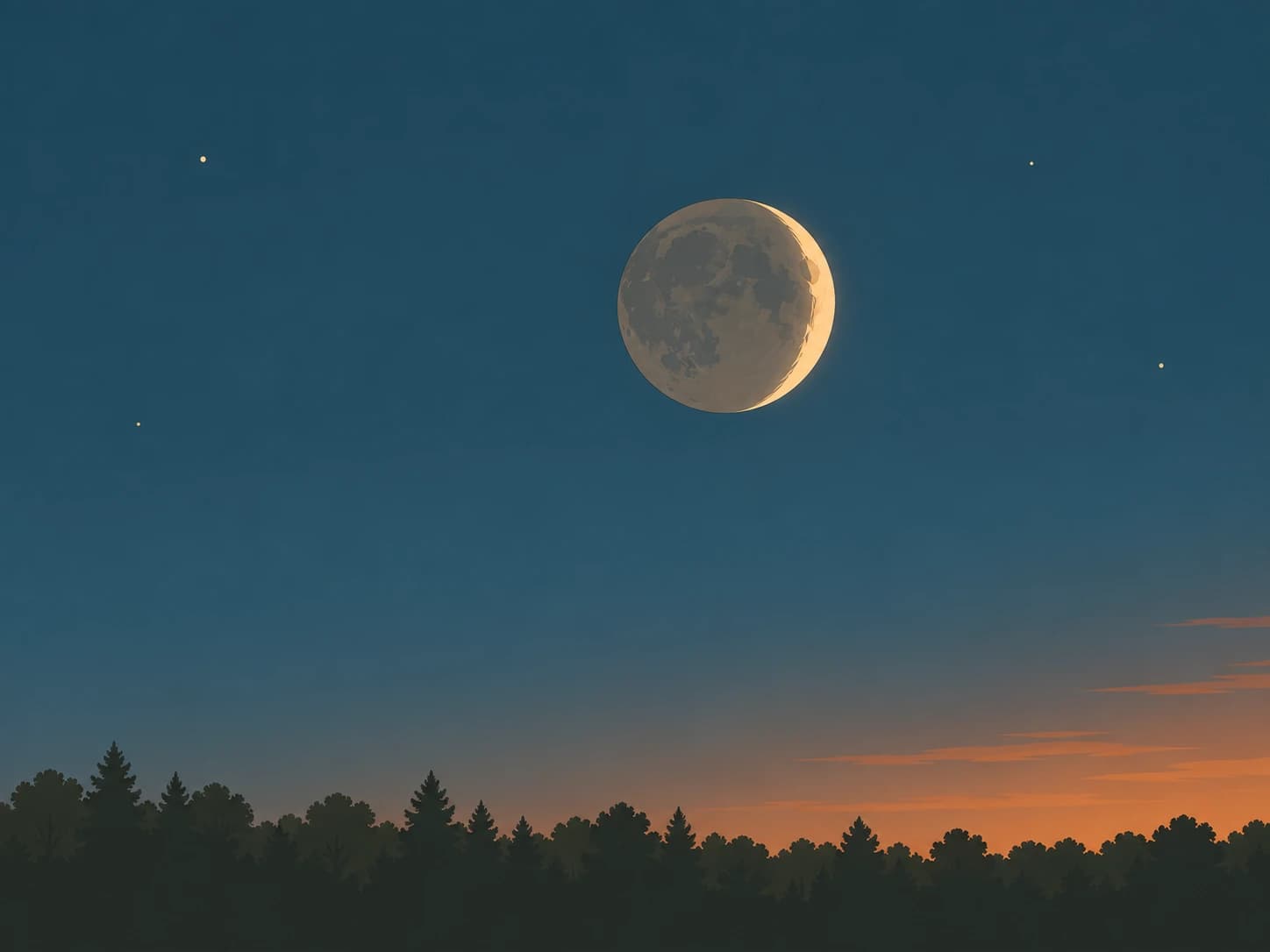
This is a walkthrough of teaching choices, not a complete lesson or a learner’s result. Prompts are illustrative; the images were generated through our curriculum image pipeline.
01 · Observation
Give curiosity something concrete.
What might be in the lesson
It could open with dated Moon photographs taken a few days apart, followed by a small comparison prompt:
“What changes from one observation to the next? What stays the same?”
- Why include it
- Looking before introducing phase names gives the explanation a job to do. There is a pattern to account for, rather than a list of words to memorize.
- What it helps teach
- Notice a pattern, describe it carefully, and distinguish what was observed from an explanation of why it happened.
02 · Explanation
Give the picture a teaching job.
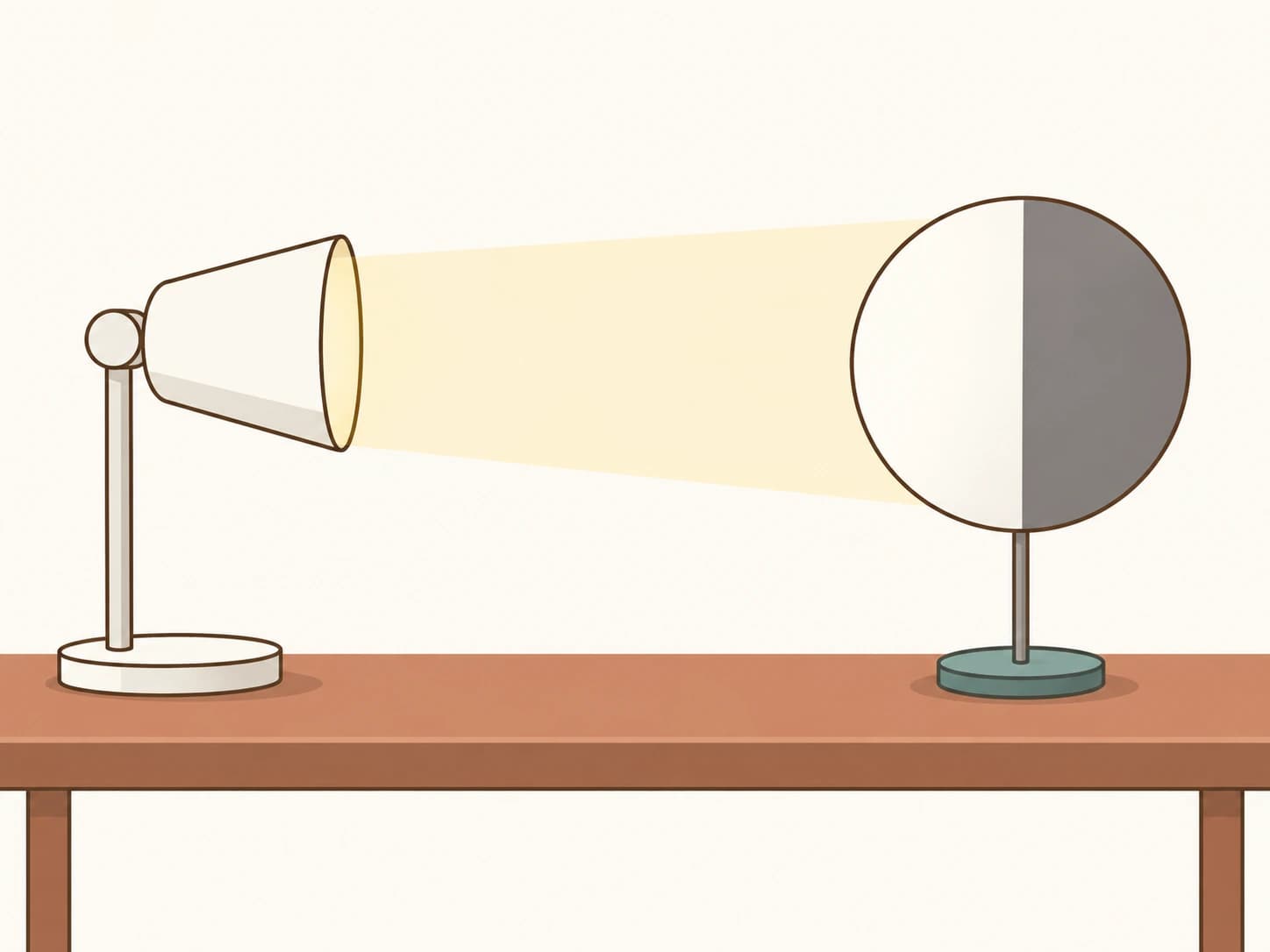
What might be in the lesson
A diagram or lamp-and-ball model could connect the light source, the Moon, and the view from Earth.
The explanation would make one distinction explicit: sunlight illuminates about half the Moon; how much of that sunlit half we see changes as the Moon orbits Earth.
- Why include it
- A spatial relationship can be hard to follow in a paragraph alone. A useful image and its explanation support each other; the image is not just decoration.
- What it helps teach
- Connect an appearance to a cause. The learner needs an explanation for the crescent, not only the word “crescent.”
The lighting, labels, and viewpoint must agree. An attractive generated image is not enough; it still needs inspection.
03 · Application
Ask the learner to use the idea.
What might be in the lesson
The lesson could show a different Sun–Earth–Moon arrangement and ask for a prediction before revealing a worked explanation:
“What would the Moon look like from Earth here? What in the model supports your prediction?”
- Why include it
- Recognizing a familiar picture is not the same as understanding it. A new arrangement asks the learner to use the explanation instead of repeat a label.
- What it helps teach
- Reason from a model, make a prediction, and connect an answer to the relationships shown.
04 · Feedback
Respond to the idea that needs work.
What might be in the lesson
If a learner attributes ordinary Moon phases to Earth’s shadow, feedback could contrast phases with a lunar eclipse:
“Earth’s shadow matters during an eclipse. Can your model change the view of the Moon without Earth blocking the sunlight?”
- Why include it
- A specific misconception gives feedback something to address. A score or “try again” does not identify which connection needs revising.
- What it helps teach
- Compare explanations, locate the mistaken connection, and revise the reasoning—not simply replace an answer.
This is the intent of useful feedback, not a guarantee that AI will identify every error. Adults can inspect and correct proposed feedback.
05 · Transfer
Change the context. Keep the idea.
What might be in the lesson
Later, the learner could see an unfamiliar Moon photograph or a differently oriented diagram and explain it without repeating the previous answer.
- Why include it
- Success on the same prompt can be memory for that prompt. A new example helps distinguish recall from an explanation the learner can use.
- What it helps teach
- Apply the idea elsewhere, retrieve it after a delay, and reveal what still needs another explanation.
An explanation the learner can use.
The aim is not to name eight phases once. It is to use sunlight and viewpoint to explain a new observation. The wording, support, and next question can change; that purpose should stay visible.
One response is evidence to inspect, not proof of mastery. Written work can inform the next step, while lesson progress and dedicated standards evidence remain different things.
How learning evidence is recordedScience background: NASA’s Moon phases guideLook at the material.
Ask what each part is for.
Start with a useful unit, inspect the teaching choices, and decide whether the approach fits your learner.
Free through December 31, 2026. Future packaging and pricing have not yet been announced.